April 2026 · 9 min read
This is the phase most reefers started the hobby for. Parameters are stable, fish are settled, and the rock is clean. It's time for your first coral.
Corals look like plants but they're animals — photosynthetic colonial organisms that build calcium carbonate skeletons and host symbiotic algae called zooxanthellae inside their tissue. They're also the part of reef keeping that requires the most chemistry knowledge, because they actively consume elements from your water as they grow.
The good news: the path to a thriving reef starts with forgiving corals that are almost impossible to kill if your basic parameters are stable. This guide tells you exactly where to start.
Corals are broadly divided into three categories based on their skeletal structure, light requirements, and chemistry demands. Every experienced reefer starts at the bottom of this list and earns their way up.
Soft Corals & Zoanthids
CHEMISTRY REQUIREMENTS
Minimal — tolerate wide parameter ranges
LIGHTING
Low to moderate
COMMON EXAMPLES
Zoanthids, Palythoa, Mushroom corals (Discosoma, Rhodactis), Leathers (Toadstool, Finger, Cabbage), Kenya Tree, Xenia
WHY THIS TIER
Soft corals don't build calcium carbonate skeletons — they're supported by protein and water pressure instead. This means they're not consuming alkalinity, calcium, and magnesium the way stony corals do. They're also the most forgiving of water quality fluctuations. If your parameters slip for a week, soft corals will usually recover. Hard corals may not.
Large Polyp Stony Corals (LPS)
CHEMISTRY REQUIREMENTS
Moderate — begin tracking Alk, Ca, Mg regularly
LIGHTING
Low to moderate
COMMON EXAMPLES
Hammer, Torch, Frogspawn (Euphyllia), Brain corals (Favites, Lobophyllia), Chalice, Duncan, Candy Cane
WHY THIS TIER
LPS corals have large, fleshy polyps and moderate chemistry requirements. They're more demanding than softies but far more forgiving than SPS. Euphyllia corals (hammer, torch, frogspawn) are some of the most popular in the hobby — their flowing tentacles are iconic. They start consuming Alk and Ca noticeably as they grow, which is when tracking those parameters becomes essential.
Small Polyp Stony Corals (SPS)
CHEMISTRY REQUIREMENTS
High — requires extremely stable Alk, Ca, Mg. Daily swings of 0.5 dKH can cause bleaching.
LIGHTING
High intensity
COMMON EXAMPLES
Acropora, Montipora, Pocillopora, Stylophora, Seriatopora
WHY THIS TIER
SPS corals are the pinnacle of reef keeping — fast-growing, intensely colored, and extraordinary to look at. They're also the most demanding corals in the hobby by a significant margin. SPS require near-perfect water chemistry, high-intensity lighting, and consistent maintenance. This is a year-two (or later) goal for most reefers.
Once you have LPS or SPS corals, alkalinity (dKH) becomes the most critical parameter you'll track. Understanding what it is and why it matters makes the difference between corals that thrive and corals that inexplicably die.
Alkalinity is a measure of the water's buffering capacity — its ability to resist pH swings. Stony corals use carbonate ions (the main component of alkalinity) to build their calcium carbonate skeletons. As corals grow, they consume alkalinity from the water. If you don't replenish it, alkalinity drops — and as it drops, so does pH stability, skeletal growth rate, and eventually coral health.
The target range for most reef tanks is 8–10 dKH. But the number matters less than the consistency. A tank running stable at 7.5 dKH is healthier for corals than a tank that fluctuates between 7 and 9.5. Swings stress coral tissue, cause bleaching, and in bad cases kill colonies overnight.
The golden rule: don't let alkalinity move more than 0.5 dKH per day.
This is the threshold most experienced reefers use. Changes faster than this — whether up or down — can cause coral tissue necrosis. When NextUpReef detects alkalinity logging during Phase 5, it tracks your trend and flags instability so you can catch it before corals show stress.
Alkalinity doesn't work in isolation. Calcium (Ca) and Magnesium (Mg) are co-consumed with alkalinity when corals build skeletons. All three need to stay in balance — and they interact with each other. If one is off, the others often are too.
ALK
8–10 dKH
Fuels skeletal growth. Consumed daily by stony corals. Most time-sensitive parameter to track.
CA
380–450 ppm
The raw material of coral skeletons. Drops alongside alkalinity in growing tanks.
MG
1250–1350 ppm
Keeps calcium dissolved and accessible. Low magnesium causes calcium and alkalinity to fall out of balance.
With just softies in the tank, water changes are usually enough to replenish the big three. Once LPS start growing and especially once SPS are added, most reefers move to a dosing regimen — either two-part solutions, kalkwasser, or an automated calcium reactor.
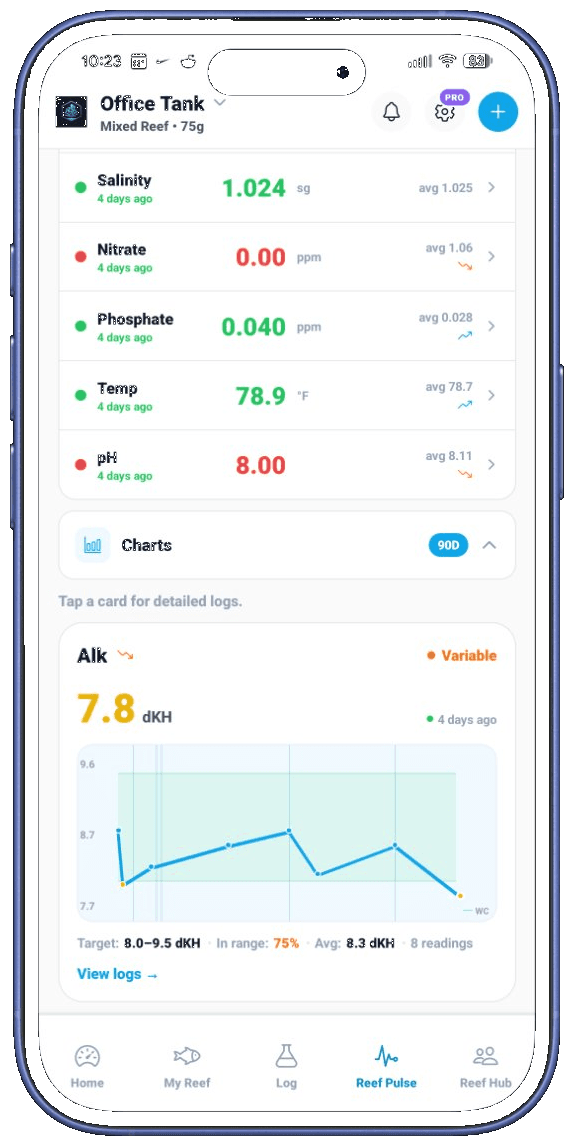
During Phase 5, NextUpReef highlights Alkalinity, Calcium, and Magnesium as guide parameters — auto-adding them to your log screen so you track the right things without having to think about it.
Corals are sensitive to sudden changes in temperature, salinity, and light. Proper acclimation takes 30–45 minutes and dramatically reduces stress-related mortality.
Coral dip
Before anything touches your tank, dip every new coral in a coral-safe solution (Coral RX, Revive, or Seachem Reef Dip) for 5–10 minutes. This removes flatworms, nudibranches, and other pests invisible to the naked eye. Rinse with tank water after dipping. Never skip this.
Float the bag
Float the sealed bag in your tank for 15 minutes to temperature-equalize. Then slowly add small amounts of your tank water to the bag over 20–30 minutes. This equalizes salinity and chemistry gradually.
Placement: start low
Start new corals lower in the tank than their eventual target position. Corals adapting to a new light intensity are like someone coming inside from the dark — sudden bright light causes stress and bleaching. Move them up over weeks as they acclimate.
Flow: moderate, indirect
Good flow keeps detritus off coral tissue and delivers nutrients. But direct blasting flow stresses most corals. Aim for turbulent, indirect flow that causes gentle polyp movement.
Give it space
Corals grow — some aggressively. Many corals sting their neighbors with sweeper tentacles that can extend far beyond their visible disc at night. Give corals room to grow and check compatibility before placing species near each other.
The following are responsible for a disproportionate share of year-one coral deaths:
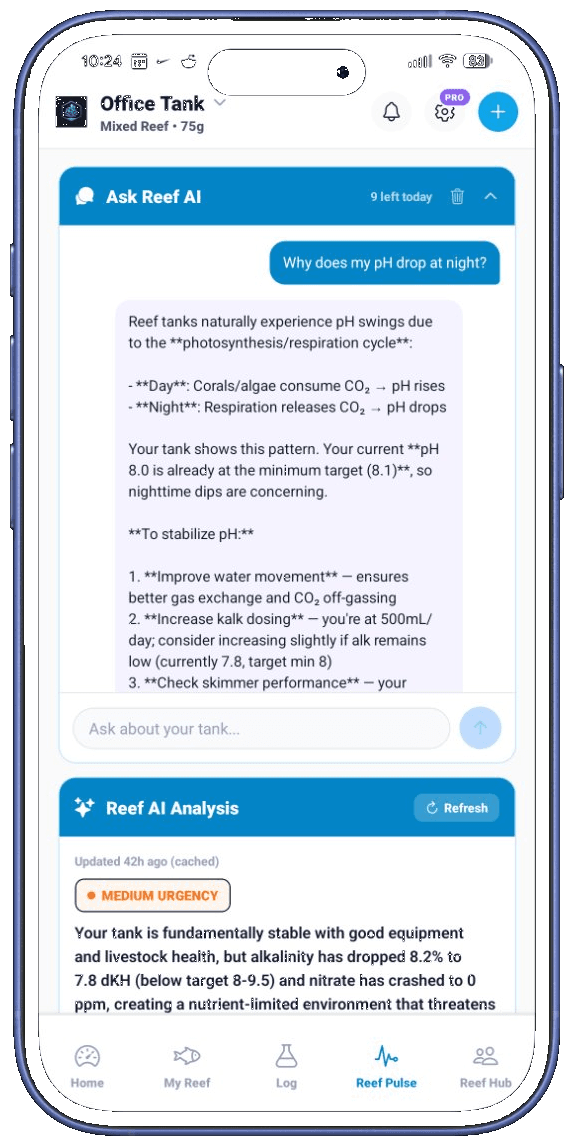
The NextUpReef New Tank Guide tracks your Phase 5 checklist — light schedule, alkalinity logs, and first coral added — so you know exactly when you've hit each milestone.
When your first corals are open, growing, and your parameters have been stable for months — you've arrived. The tank you started from scratch is now a reef. That's what Phase 6 looks like.
NEXT IN THE SERIES
Your Reef is Established: What Comes Next →
Coralline algae is spreading, parameters are stable, and your reef is maturing. Here's what a healthy established reef looks like, how to grow your coral collection responsibly, and when to consider dosing and a refugium.
