
Home › Blog › Reef Tank Temperature Guide
Reef Tank Temperature: Ideal Range and How to Control It
May 9, 2026 · 8 min read · By NextUpReef
Temperature is the parameter most likely to kill your reef tank — and most reefers don't take it seriously enough. A stuck heater can cook a tank in 12 hours. A power outage in winter can freeze livestock overnight. A summer heatwave can bleach an entire SPS collection. None of these are rare events.
This guide covers ideal reef tank temperature ranges, how to size and protect your heaters, how to cool a tank in summer, and how to track temperature so you spot problems before they kill things.
What Temperature Should a Reef Tank Be?
Healthy reef tanks run between 76 and 80°F (24 to 27°C). Pick a setpoint in that range, hold it, and don't look back. The most common targets are 77, 78, and 79°F — all are fine.
Reef Tank Temperature Reference:
- Ideal range: 76 – 80°F (24 – 27°C)
- Common setpoint: 78°F (25.5°C)
- Acceptable swing: ±1°F daily
- Concerning: Above 82°F or below 74°F for hours
- Dangerous: Above 84°F or below 72°F sustained
- Fatal zone: Above 86°F or below 68°F for any extended time
Reefers debate whether higher temps drive faster coral growth. There's some truth to it — corals at 80°F do grow faster than corals at 76°F. But the risk grows just as fast. A tank running at 80°F has 2°F of headroom before stress. A tank at 76°F has 6°F. For most readers, the lower setpoint is the safer choice.
Why Stability Matters More Than the Exact Number
A tank that holds 78°F all day, every day, is healthier than one that swings between 76 and 81°F daily. Corals don't care about the absolute temperature as much as they care about consistency. Big swings stress the symbiotic algae living in coral tissue, which causes bleaching even at otherwise safe temps.
Common causes of temperature swings:
- Heater turning on and off too aggressively (cheap heaters do this)
- Lights raising temp 2 to 4°F during the photoperiod, then dropping at night
- HVAC cycling — especially in rooms with seasonal swings
- Open sumps with high evaporation cooling the water
- Sun hitting the tank for part of the day
- Undersized heater struggling to maintain setpoint
Heater Sizing
Use 3 to 5 watts of heater per gallon of total system volume (display + sump). More wattage isn't better — it just means the heater works harder when it fails on.
Heater Sizing Reference:
- 20 gallon tank: 1 × 75W heater
- 40 gallon tank: 1 × 150W or 2 × 75W
- 75 gallon tank: 2 × 150W
- 120 gallon tank: 2 × 200W
- 180+ gallon tank: 2 × 300W or inline titanium heater
Always use two smaller heaters instead of one big one. When a heater fails open (stuck on), a 300W heater cooks the tank dramatically faster than a 150W. When a heater fails shut, you still have the second one keeping the tank warm. This single rule prevents more tank disasters than any other heater best practice.
Heater Controllers Are Mandatory
Heater built-in thermostats fail constantly. They wear out, stick in the open position, or drift over time. Always run heaters through an external temperature controller that overrides the heater's own thermostat.
Good controllers in the $30 to $80 range:
- Inkbird ITC-308: Cheap, reliable, runs one heater plus a backup outlet for a fan.
- Ranco ETC-111000: Industrial-grade, basically indestructible.
- BRS reef-rated controllers: Built for reef use, integrate with controllers.
- Apex / Neptune controller temp module: If you have a full controller, just plug heaters into a temperature-controlled outlet.
Set the heater's own thermostat 1 to 2°F higher than your target, then let the external controller cut power at the actual setpoint. The external controller is your safety net.
Cooling a Reef Tank in Summer
Summer is when most reef disasters happen. Power outages, AC failures, hot apartments — all push tanks into the danger zone. The cooling options, from cheap to expensive:
- Fans over the sump (cheap, very effective). A USB or computer fan blowing across the sump or display surface drops temperature 2 to 4°F through evaporative cooling. ATO has to keep up with the extra evaporation — usually doubles or triples evap rate.
- Reduce lighting intensity or photoperiod. LEDs add 2 to 5°F of heat. Cutting peak intensity by 30 percent during a heatwave is a quick win. Save your corals — they'll adapt back to full light when the room cools.
- Run a chiller (expensive, definitive). If the room hits 90°F regularly, fans won't cut it. A 1/10 HP chiller handles a 75 gallon tank. Hammered-aluminum brands like JBJ Arctica are quiet and reliable. Expect $400+ used or $700+ new.
- Keep the room cool. Cheap window AC for the tank room is usually less than half the cost of a chiller and benefits you too.
- Crack a window at night. Cheapest cooling in shoulder seasons. The tank releases heat overnight as room temp drops.
Winter Considerations
Winter is when stuck-open heaters cause the most damage. Cold rooms force heaters to work harder, which means more wear, which means more failures. A few defensive moves:
- Run two heaters splitting the load — described above.
- External controller — non-negotiable in winter.
- Replace heaters every 2 to 3 years preemptively. They're cheap. Don't wait for failure.
- Have a battery backup or generator for the heater circuit during winter storms.
- Don't place the tank near drafty windows or exterior walls.
Tracking Temperature Over Time
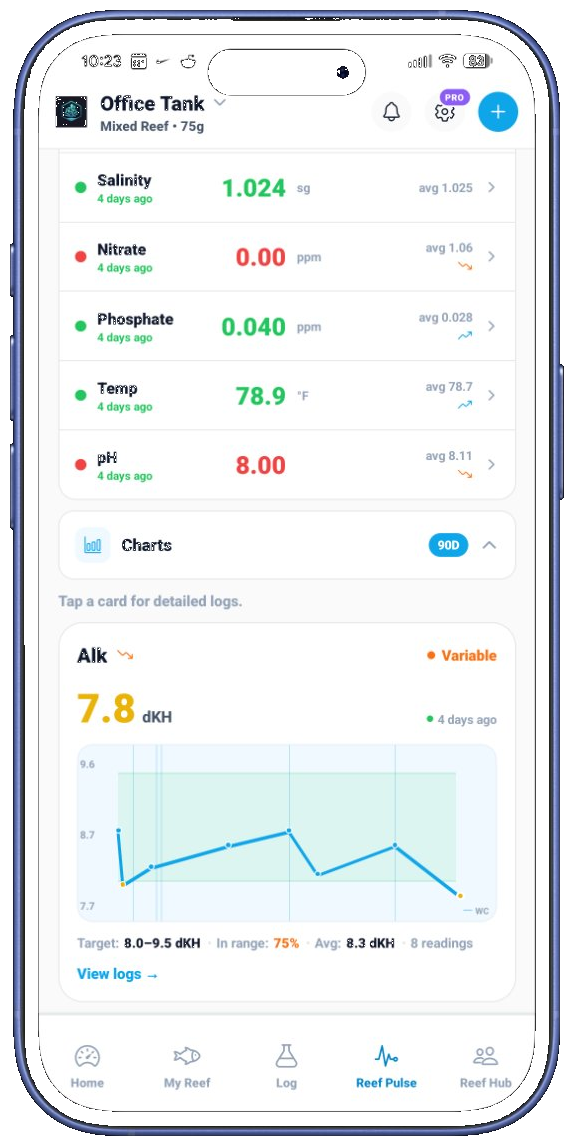
A single temperature reading is almost useless — temperature changes throughout the day, throughout the seasons, and with every cycle of your HVAC. What matters is the pattern. A chart of daily highs and lows over weeks tells you whether your heater is reliable, whether your lighting is adding too much heat, and whether a heatwave is creeping into the danger zone.
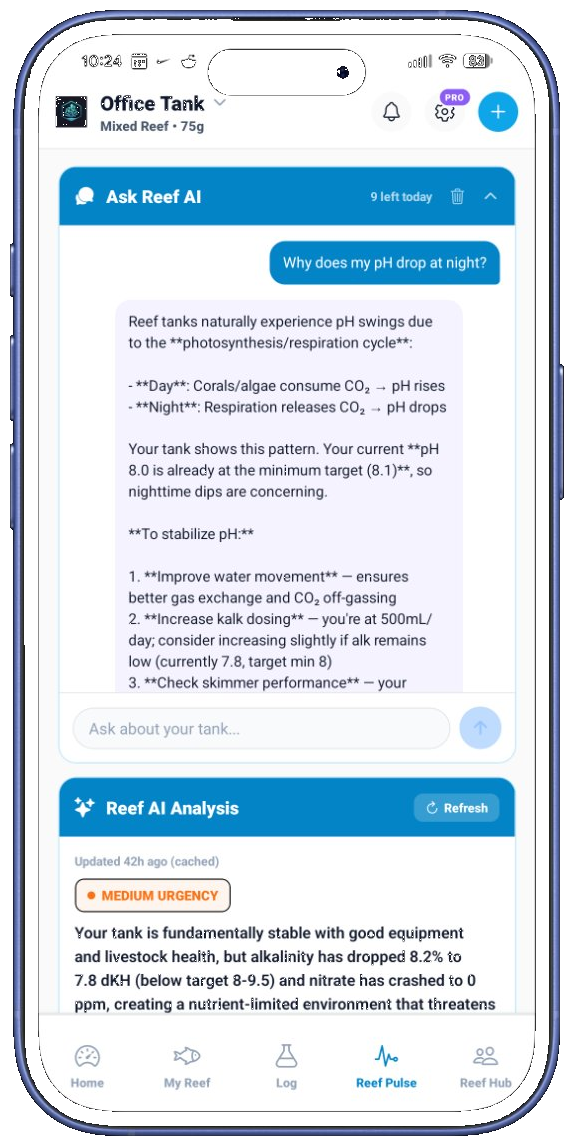
NextUpReef logs every temperature reading and plots it on a chart. You see your daily range at a glance. If your tank started cycling 4°F daily where it used to be 1°F, something changed — and you have evidence to investigate. See our parameter tracking guide →
Common Temperature Mistakes
- Trusting the heater's built-in thermostat. They fail. Always use an external controller.
- One big heater instead of two small ones. Single point of failure. Always split the load.
- Chasing high temps for "faster growth." A 1°F warmer tank isn't worth the bleaching risk during a heatwave.
- Ignoring lighting heat. LED lights add real heat. Account for the spike during photoperiod when setting your max temperature alarm.
- No temperature alarm. A controller (or NextUpReef notifications) that pings you when temperature crosses a threshold is the difference between catching a stuck heater and losing the tank.
- Not replacing aging heaters. A 4-year-old heater that's still "working" is a ticking clock. Replace preemptively.
Final Thought
Temperature isn't the parameter reefers chase — but it's the one that kills tanks fastest when it goes wrong. Stuck heaters, summer heat, and winter outages don't care how clean your alkalinity numbers look. Two heaters, an external controller, a fan for summer, and consistent tracking is the whole defense. Set it up once and stop worrying about it.
Track your reef tank temperature with NextUpReef — free.
Log every reading, watch trends across seasons, and get AI alerts when temperature drifts. iOS and Android.