April 2026 · 8 min read
Setting up a reef tank for the first time is one of the most exciting things you can do as a hobbyist — and one of the easiest to get wrong. Most beginners don't fail because reef keeping is too hard. They fail because nobody told them what to do on day one.
This guide walks you through Phase 1 of the reef keeping journey: getting your tank filled, your equipment running, and your rock placed — correctly — before a single living thing goes in the water.
Reef keeping has a reputation for being expensive, and that reputation is partially earned. But a lot of new reefers overspend on day one because they buy gear they don't need yet. Here's what actually matters at setup:
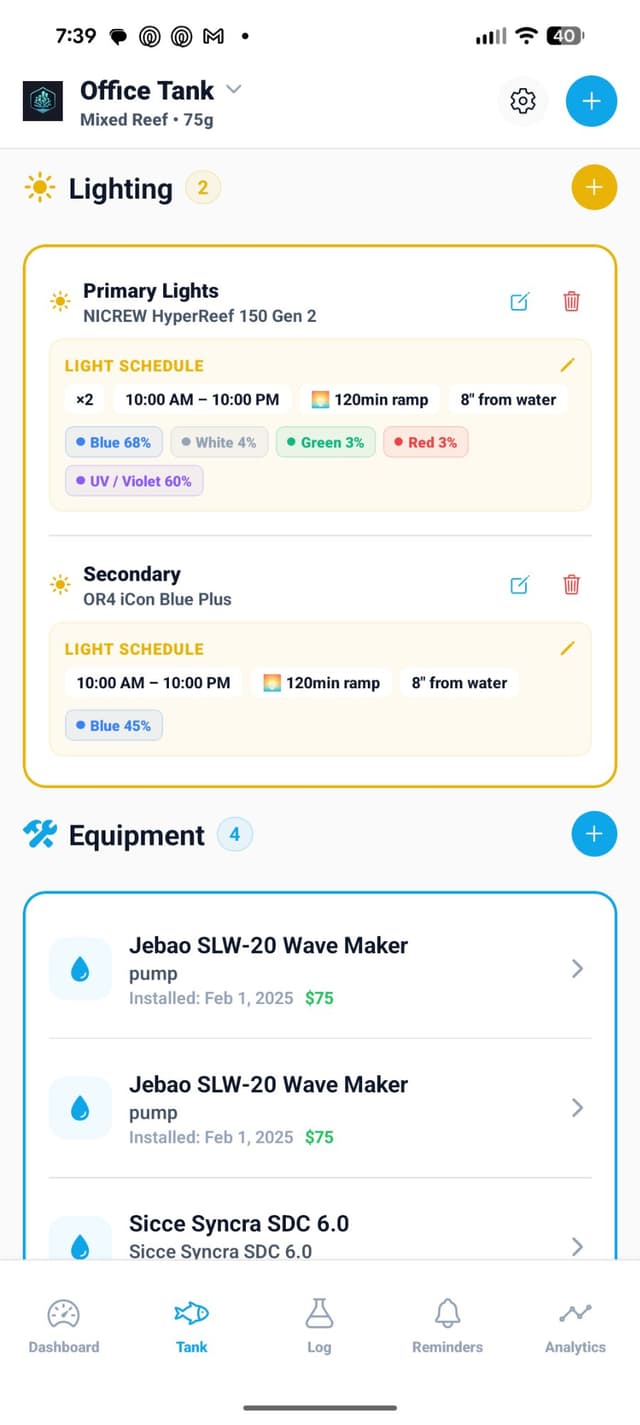
NextUpReef lets you log all your equipment and lighting schedules in one place — brand, model, schedule, and when you added it. Never forget what's running in your tank.
This is one of the first real decisions you'll make, and it affects how your tank cycles and what pests you might introduce.
🪨
Dry Rock (Dead Rock)
+ No hitchhikers or pests
+ No aiptasia, no mantis shrimp
+ Cycles predictably with ammonia dosing
− Needs ammonia source to start cycle
− Slower cycle without live bacteria
− No natural biodiversity initially
🌿
Live Rock
+ Existing bacteria speeds cycle
+ Natural biodiversity from the start
+ May cycle without additional dosing
− Risk of hitchhikers and pests
− Inspect carefully before adding
− Quality varies by source
For most beginners we recommend dry rock. The cycle takes a little longer, but you avoid introducing pests that can plague your tank for years. Seed it with a small bottle of live bacteria (Dr. Tim's One & Only or FritzZyme 900) and you'll cycle just as fast as live rock.
Salinity — measured as specific gravity (SG) — is the first parameter you'll dial in, and the one that matters most before any life enters your tank.
TARGET SALINITY
1.024 – 1.026 SG
Natural seawater is 1.025. Staying in this range keeps fish, inverts, and corals comfortable. Avoid going above 1.026 or below 1.023.
Mix your saltwater in a separate container before adding it to the tank — never add dry salt directly. Use your refractometer to check before you pour. One common mistake: mixing saltwater in the tank itself causes hot spots where salt hasn't fully dissolved, which can stress equipment and leave residue on glass.
Never use tap water. Tap water contains chloramines, phosphates, nitrates, and silicates that will fuel persistent algae blooms. Always use RODI (reverse osmosis deionized) water — either from a home unit or purchased from your local fish store.
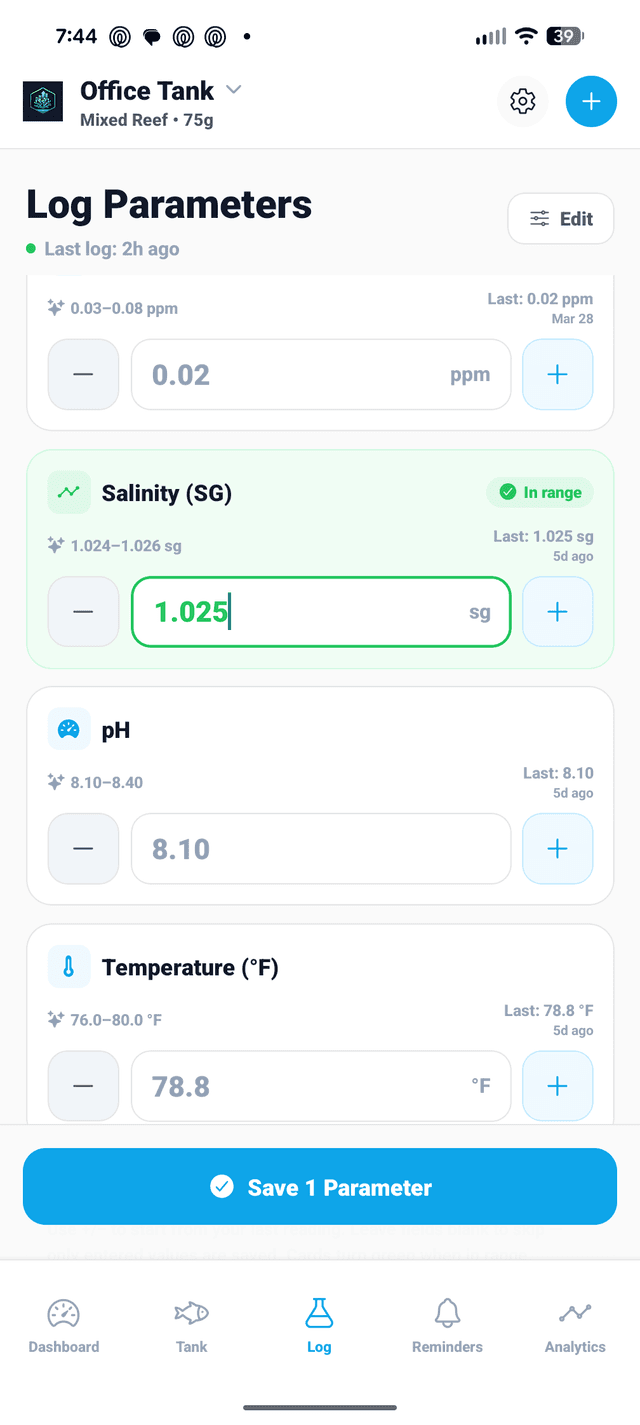
Log your first salinity reading in NextUpReef and instantly see if you're in range. The app tracks your target of 1.024–1.026 and flags anything outside it.
Adding fish or corals before cycling
This is the number one tank killer. Your tank needs to establish a colony of beneficial bacteria before anything alive goes in. Skip the cycle and you'll likely lose everything within days. We cover the cycle in detail in Part 2 of this series.
Turning the lights on immediately
Your tank has no algae-eating organisms yet. Turning lights on before you have a cleanup crew is an invitation for a diatom and hair algae explosion. Keep lights off until you're ready to add your first cleanup crew in Phase 3.
Using tap water
Even in areas with 'good' tap water, municipal water contains additives that will cause problems in a reef. Phosphates from tap water fuel persistent algae blooms that can last months. RODI water only.
Skimping on flow
Reef tanks need significantly more water movement than freshwater tanks. Aim for 10–20x your total water volume in turnover per hour. Dead spots accumulate detritus and create anaerobic zones.
Not tracking anything
New reefers often go weeks without logging a single parameter, then wonder why something went wrong. The pattern matters as much as the number — a salinity reading of 1.024 means nothing without knowing it was 1.026 three days ago.
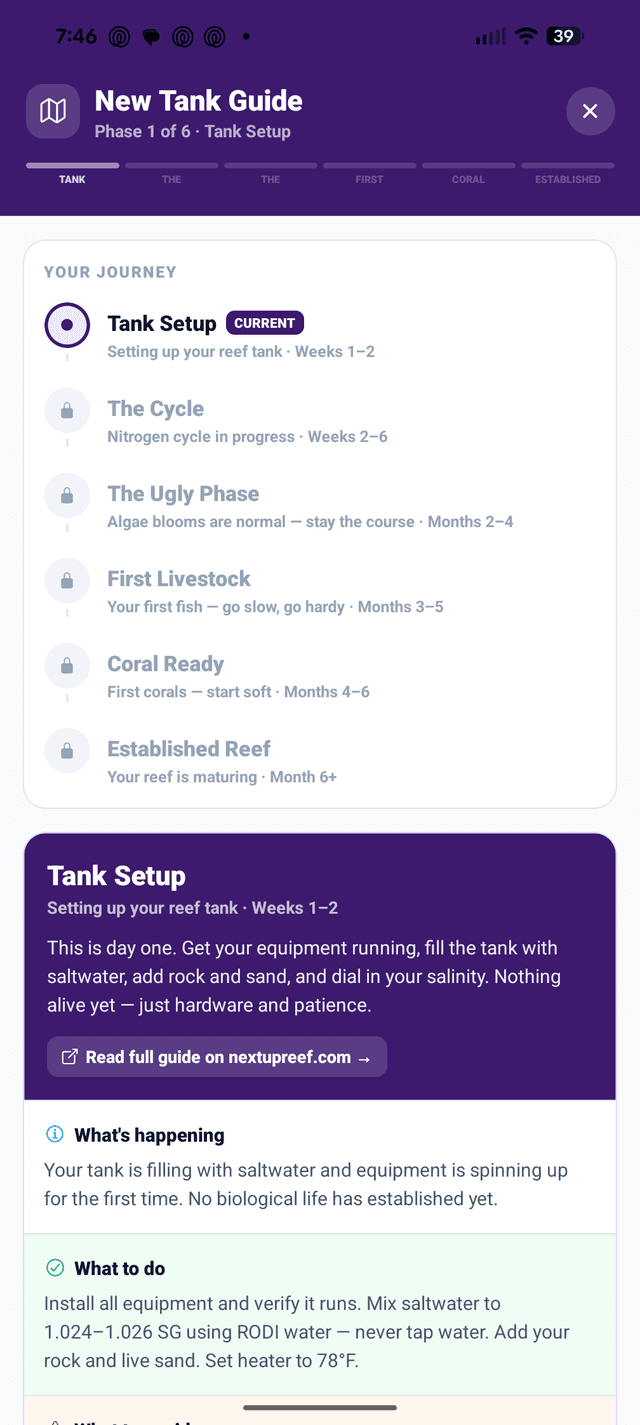
Track every step with the New Tank Guide
NextUpReef's Year 1 Journey walks you through every phase of setting up a new reef tank — with checklists, warnings, and automatic detection when you've completed a step.
Download NextUpReef Free →Before you move on to cycling, make sure you've completed everything on this list:
Tank filled with RODI water mixed with reef salt
Salinity measured and confirmed at 1.024–1.026 SG
All equipment installed and running — heater, pump, powerheads
Heater confirmed at 78°F with a separate thermometer
Rock and sand placed (dry or live)
Lights installed but OFF
Protein skimmer running (if using one)
Test kit and refractometer on hand
Ammonia source ready for dosing (dry rock only)
NEXT IN THE SERIES
How to Cycle a Reef Tank →
Your tank is set up — now the real waiting begins. Learn how the nitrogen cycle works, how to know when you're cycled, and the most common mistakes that extend the cycle unnecessarily.
